
To be honest, before visiting Bangkok, my impression of the city was vague, defined only by a few keywords: hot, crowded, temples, night markets, and swarms of motorbikes.
But once I actually arrived, I discovered it was far more complex than those labels suggested. It isn’t a city of “single-note experiences”; rather, it is a place that constantly shifts states—within ten minutes, you can step from a chaotic, noisy street into a temple so quiet that the only sound is the wind.
For this trip, I didn’t plan a “checklist” itinerary; instead, I tried to experience Bangkok’s rhythm at a slower pace.
I. The Grand Palace and Wat Phra Kaew: Struck by “Density”
My first stop in Bangkok was the Grand Palace and Wat Phra Kaew (Temple of the Emerald Buddha).
Frankly, I was a bit overwhelmed the moment I walked in—not just by the grandeur, but by the sheer “visual density.” Gold, white, and green intertwined; the architectural details left almost no empty space, and every corner seemed to shimmer with light.
It was incredibly crowded, yet strangely, the throng of people didn’t diminish the sense of solemnity; instead, it made the entire space feel more “alive.”
I stood before the main hall for a long time, watching the sunlight hit the golden roof. In that moment, I felt something hard to describe—not an overwhelming emotional jolt, but a realization: “So, a city really can blend faith and aesthetic beauty to such an exquisite degree.”
II. Wat Pho: Finding Quiet After the Bustle
After leaving the Grand Palace, I visited the nearby Wat Pho (Temple of the Reclining Buddha).
Unlike the dense, ornate atmosphere I had just left, this place was noticeably quieter. The famous Reclining Buddha statue is massive—dominating the entire space—yet strangely, it didn’t feel oppressive; instead, it had a calming effect, helping my emotions settle.
The details on the soles of the Buddha’s feet left a deep impression on me; the patterns, inlaid with mother-of-pearl, were so intricate that you had to step closer to truly appreciate them.
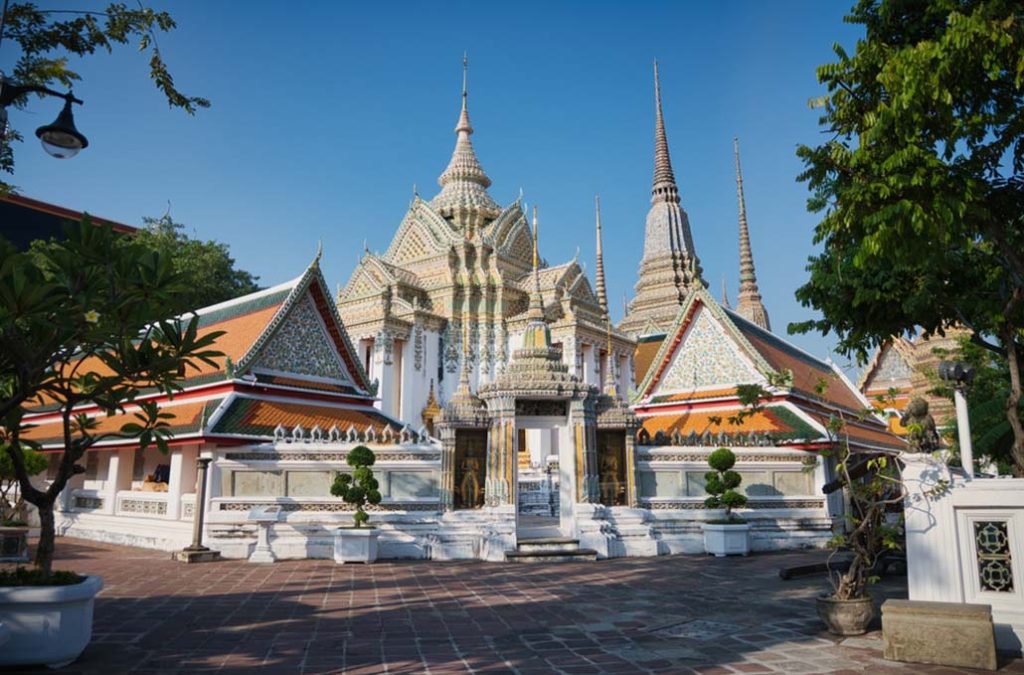
I wasn’t in a rush, so I simply sat on the floor nearby for a while. There were tourists and locals around, yet the overall atmosphere remained peaceful. That was the moment I first experienced a sense of “slowness” in Bangkok.
III. Chao Phraya River: Another Way the City Breathes
Later, I decided to take a boat ride along the Chao Phraya River.
If Bangkok’s streets are characterized by speed, density, and constant change, then the river serves as its “buffer zone.”
As the boat moved across the water, the scenery along the banks shifted continuously: modern skyscrapers, weathered wooden houses, temple spires, and glass-walled hotels mingled together without clear boundaries.
I had no specific destination in mind; I simply sat by the side of the boat, taking in the view. The wind was strong and the water choppy, yet I felt completely relaxed.
In that moment, I realized that Bangkok is not a city of strictly defined zones, but a place where different layers of time overlap.
IV. Chatuchak Weekend Market: Chaotic Yet Full of Life
If the temples during the day gave me a sense of order, Chatuchak Weekend Market offered the exact opposite experience.
The place is vast—so large that it is easy to get lost. Stalls are packed tightly together, selling everything from clothes, spices, handicrafts, pets, and food to items you would never expect to find.
At first, I found it a bit overwhelming; the space was cramped, the noise level high, and the air filled with a complex mix of scents. But as I walked on, I began to embrace this “chaos.”
I even grew to like the atmosphere—it felt authentic. There was no sense of contrived commercialism; every stall seemed to be expressing its own unique character.
I bought a cup of iced coconut water at a small stall and sat in a corner, watching the crowds go by. That was when I realized that this “order within disorder” is the very essence of Bangkok’s spirit.
V. Wat Arun: A Moment of Quiet Romance
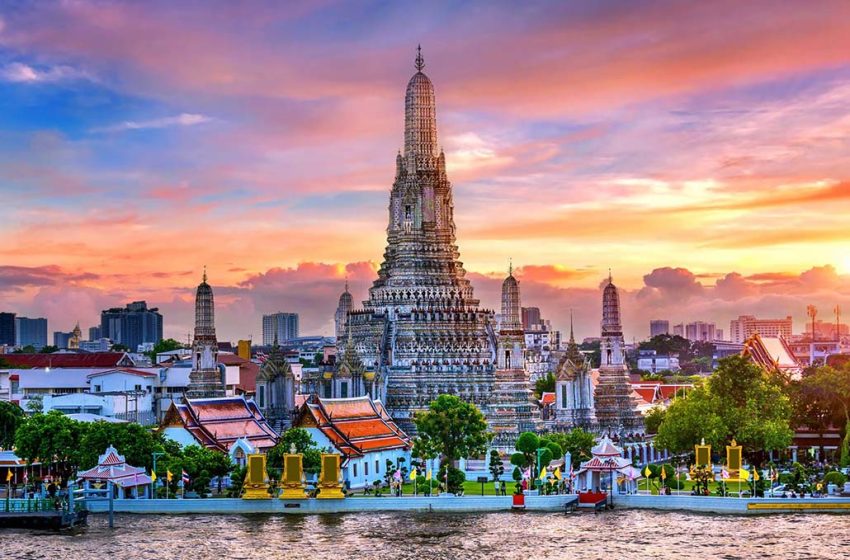
I made a point of visiting Wat Arun at dusk.
It turned out to be the perfect decision.
As the sun began to set, the colors of the temple shifted gradually—from white to gold, and then to a soft orange. The light striking the porcelain tiles on the spires created a delicate, shimmering glow. I stood on the opposite bank, watching the scene gradually transition into twilight; the atmosphere was completely different from the daytime. If Bangkok by day is “extroverted,” then Bangkok at this moment is “introverted.” Many people sat by the river taking photos, yet the scene was quiet—there was no clamor or noise. It was the most relaxing moment of my entire trip.
VI. Siam: Another Face of Modern Bangkok
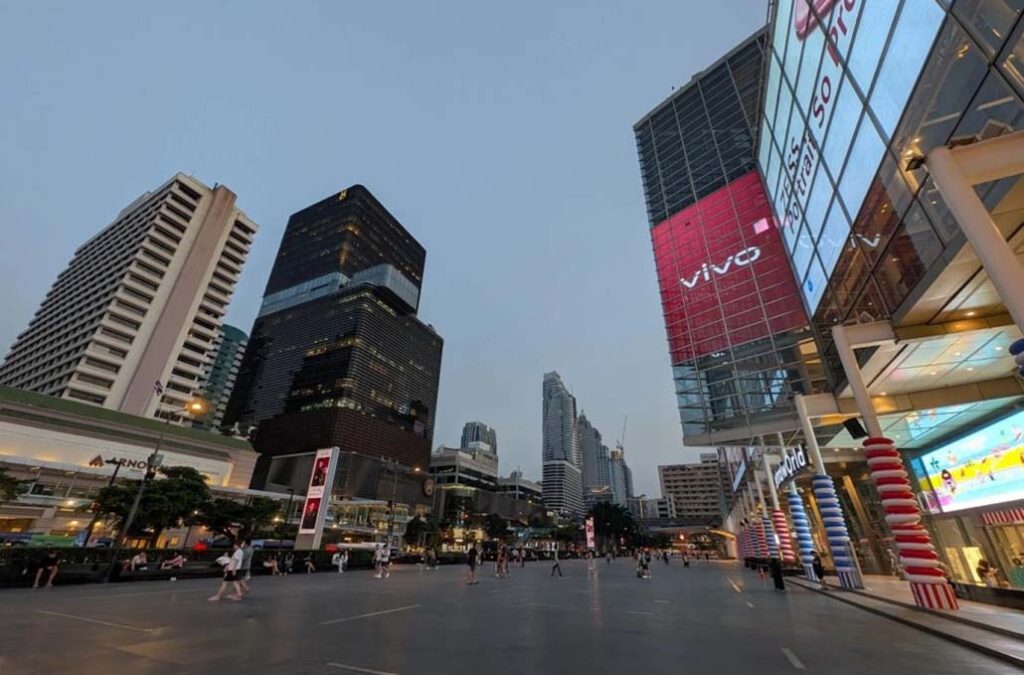
Before leaving, I visited the Siam district. It was a world apart: shopping malls, brand-name stores, air conditioning, glass facades, young people, and a fast pace.
A stark contrast to the temple districts, this area felt like a quintessential “modern urban center.” The crowds moved quickly, information abounded, and everything operated with high efficiency.
I didn’t stay there long, as the contrast was so jarring. Yet, it was precisely this contrast that gave me a clearer view of Bangkok’s structure: it isn’t defined by a single style, but rather by multiple layers coexisting simultaneously.
Bangkok Is Not Just “One City,” but a “Collection of States”
As I left Bangkok, I kept pondering a question: why does this city leave such a complex impression?
I gradually realized that Bangkok’s charm lies in the fact that it makes no attempt to be uniform. It can be ancient and modern, chaotic and serene, commercial and spiritual—all at once. You can experience a complete shift in mood within a single day, yet these experiences never clash.
For me, the most significant takeaway from this trip wasn’t the number of tourist attractions I visited, but a single realization: a city’s richness isn’t measured by how many sights it has, but by the variety of life’s rhythms it allows you to experience. Bangkok is precisely that kind of place.