
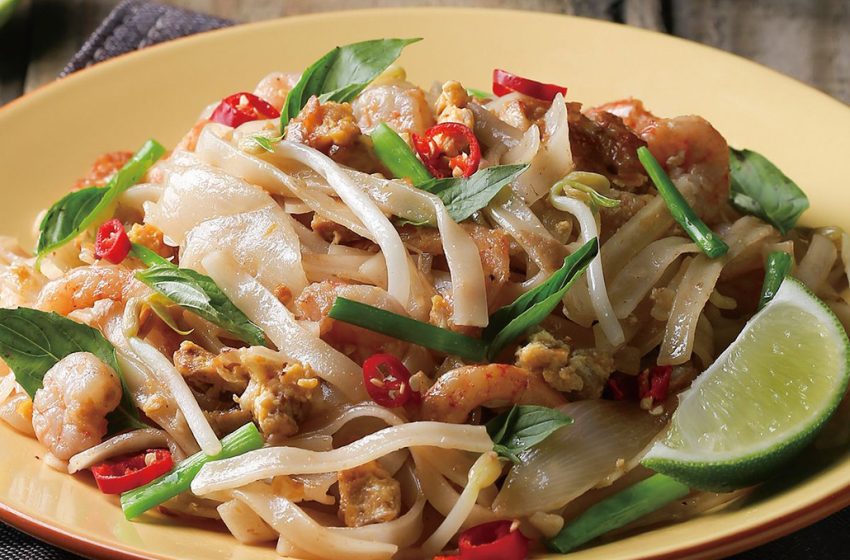
To be honest, before visiting Bangkok, my understanding of Thai cuisine was simple: Tom Yum Goong, mango sticky rice, and Pad Thai—basically the standard “tourist staples.”
But once I actually arrived in Bangkok, I discovered that the city’s culinary landscape was far more complex than I had imagined. It wasn’t just about a few signature dishes; it was an entire ecosystem of food spanning from street corners to night markets, and from humble stalls to established restaurants.
More importantly, the standard for what constitutes “delicious” here was completely different from my previous perceptions.
1. My First Pad Thai: From “Familiar” to “Redefined”
The first proper meal I had in Bangkok was a classic Pad Thai.
I ordered it at a roadside stall, not a restaurant. The setup was simple: a single wok, a pile of ingredients, and a cook constantly tossing the noodles.
When it was first served, I actually underestimated it because it didn’t look complicated—just rice noodles, bean sprouts, egg, shrimp, and some sauce.
But after the first bite, I immediately realized I had been wrong.
The layers of flavor were incredibly distinct—not in a way that felt like a cluttered jumble, but rather a clean, harmonious balance. Sour, sweet, salty, and savory notes were all present, yet no single flavor overpowered the others.
That was the moment I realized the essence of Thai street food isn’t “refinement,” but “balance.”
2. Tom Yum Goong: A More Direct Sensory Impact Than Expected
The next day, I tried Tom Yum Goong at a local restaurant.
To be honest, this dish isn’t exactly “friendly” to first-timers. The sourness and spiciness hit you head-on, without any buffer.
I was actually taken aback by the first sip because it defied the logic of “soup” as I knew it. It wasn’t gentle or soothing; it was bold and impactful.
Yet, strangely enough, as I kept drinking, I began to embrace this intense flavor combination—and even started to get hooked. I eventually understood that this soup isn’t meant to be “comforting” in the traditional sense; it’s designed to “awaken the palate.”
3. Street-Side Mango Sticky Rice: Another Expression of Sweetness
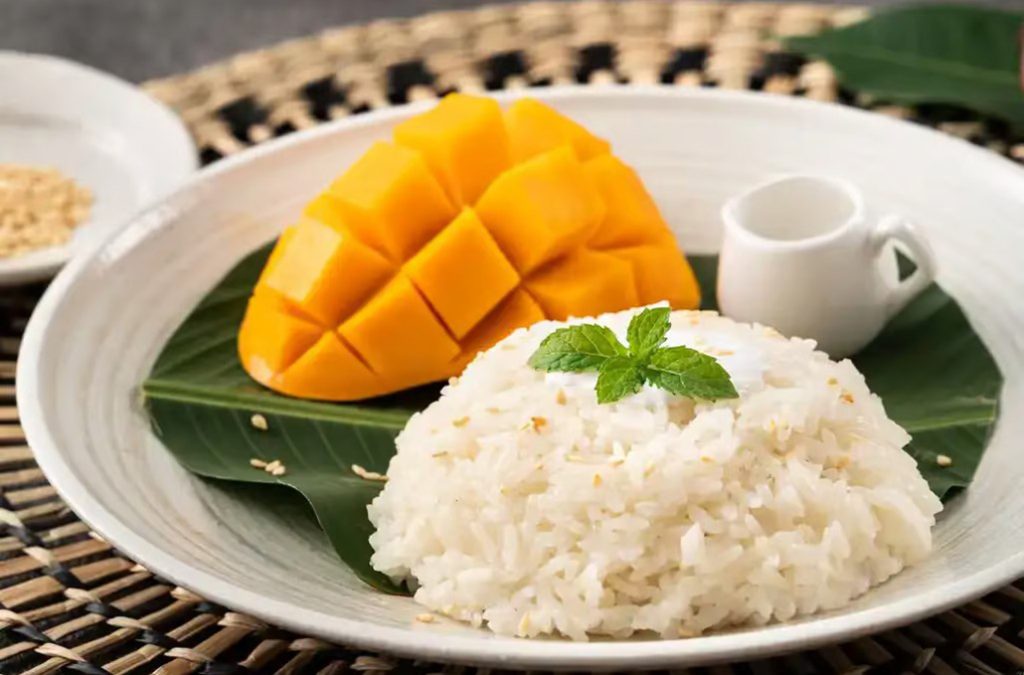
On the streets of Bangkok, mango sticky rice is ubiquitous. I bought mine from a small stall; the vendor worked quickly, packing and handing me a portion in just a few minutes.
The first bite was intriguing: the fresh sweetness of the mango, the soft, chewy texture of the sticky rice, and the aroma of coconut milk blended together without overpowering one another.
Unlike many desserts, it doesn’t feel “light”; instead, it has a certain substance to it. As I sat by the roadside eating it and watching the crowds pass by, it struck me that this dessert perfectly suits Bangkok—it looks simple, yet it possesses rich, complex layers.
4. Night Markets: Food Isn’t the Star, but Part of the “Overall Experience”
If daytime restaurants helped me understand the food itself, Bangkok’s night markets (such as the Train Night Market or Ratchada Night Market) helped me understand the very act of eating.
In the night market, food does not exist in isolation; it is inextricably linked to the environment.
You walk and eat, drawn in by a multitude of aromas: the scent of grilled seafood, the savory fragrance of fried foods, the fresh sweetness of fruit stalls, and the cool, refreshing air around beverage stands.
What left the deepest impression on me was a skewer of grilled squid; the vendor kept turning it over the charcoal fire, and the moment the sauce was brushed on, it would hiss and billow smoke. That specific aroma is something a fine-dining restaurant simply cannot replicate.
I wasn’t “sitting down for a proper meal” in the traditional sense; instead, I pieced together a full meal while constantly moving and sampling various snacks.
It was an experience of “fluid dining” rather than a conventional sit-down meal.
5. Thai Milk Tea: Sweetness as Part of the Culture
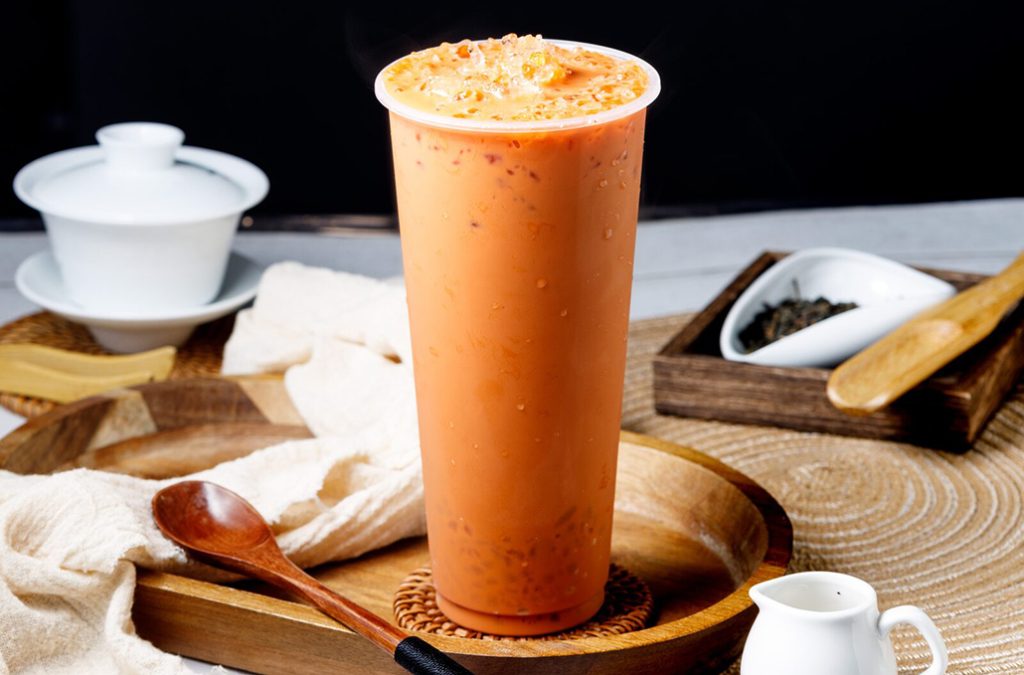
In Bangkok, I drank Thai milk tea more frequently than water. At first, the sweetness took some getting used to—it was incredibly rich, intensely sweet, and strikingly vibrant in color.
But over time, you realize it aligns perfectly with the local culinary ethos: bold, direct, and unapologetic.
Once, while sitting in a small shop sipping my tea and watching the street traffic, I suddenly realized that this drink wasn’t just “sweet”; it was an integral part of the city’s rhythm—fast-paced, decisive, and unambiguous.
6. Fruit Stalls: An Easily Overlooked Delight
While many visitors to Bangkok focus on main courses, I found myself increasingly drawn to the fruit stalls. Pineapples, dragon fruit, durian, mangosteen, mangoes—almost everything is cut fresh on the spot.
The pineapple left the deepest impression on me; it was completely different from what I was used to—incredibly sweet with almost no acidity.
I remember buying a box of fruit from a roadside stall one evening and eating it as I walked. The breeze was hot, yet the fruit was cool—a striking contrast. In that moment, I realized that Bangkok’s cuisine is about more than just flavor; it is about the “flavor of the setting” itself.
Bangkok’s Food Is Not Just “Tasty”—It Is “Authentic”
As I left Bangkok, what kept playing over in my mind wasn’t any single dish, but the entire culinary landscape of the city. It wasn’t defined by the standardized uniformity of fine dining, but by a complex ecosystem of street stalls, night markets, and restaurants.
Here, “tastiness” isn’t the only benchmark; what matters more is the “flavor of life.” For me, the greatest takeaway wasn’t the number of dishes I sampled, but a renewed understanding of a concept: food is not merely a sensory experience—it is a way for a city to express itself. And Bangkok is a city that tells its story through food.