If I had to describe this trip to Okinawa in a single sentence, I would call it a journey “surrounded by the sea.”
Unlike city trips on Japan’s main island, Okinawa felt less like a tourist destination where one rushes to tick off sights, and more like a living space embraced by the ocean. I spent a few days there without a packed itinerary; instead, I focused on key attractions, taking my time to stroll and observe, allowing myself to settle into the island’s unique rhythm.
As it turned out, this unhurried approach allowed me to notice so many more details.
First Impressions: That Island Vibe Starts at the Airport
The moment the plane touched down at Naha Airport, I could sense the difference between Okinawa and the Japanese mainland.
The airport was compact yet orderly and quiet, lacking the tense, fast-paced rush typical of major metropolitan airports. Stepping out of the terminal, the first breeze that greeted me carried a distinct humidity—and even a faint scent of the sea.
On the drive from the airport to the city center, I kept my eyes glued to the window.
The urban landscape wasn’t densely packed with buildings; instead, patches of blue sea would frequently peek through the gaps between structures. It wasn’t a jarring visual impact, but a steady, constant presence that made me realize just how inseparable life here is from the ocean.
Downtown Naha: Setting the City’s Pace
My first stop was downtown Naha. Compared to Tokyo or Osaka, Naha felt more laid-back and less densely built-up.
I didn’t follow a set route; I simply wandered the streets at random.
The city layout wasn’t complex, yet every street seemed to have its own rhythm. Commercial activity was concentrated around Kokusai Dori (International Street), while other areas felt much quieter.
Walking through the streets, I could clearly sense an atmosphere that encouraged slowing down. No one was in a rush, and there was little honking from traffic; everything moved at a gentle, unhurried pace.
It was the kind of environment that made it easy to step out of the “task-oriented” mindset often associated with travel.
Shurijo Castle: A Space Where History and Reconstruction Intertwine
Shurijo Castle was the first major landmark I visited in Okinawa.
It wasn’t far from downtown Naha, though the terrain gradually rose in elevation as I approached. Upon arriving at the entrance, there is an uphill walk, and the surrounding trees become noticeably denser.
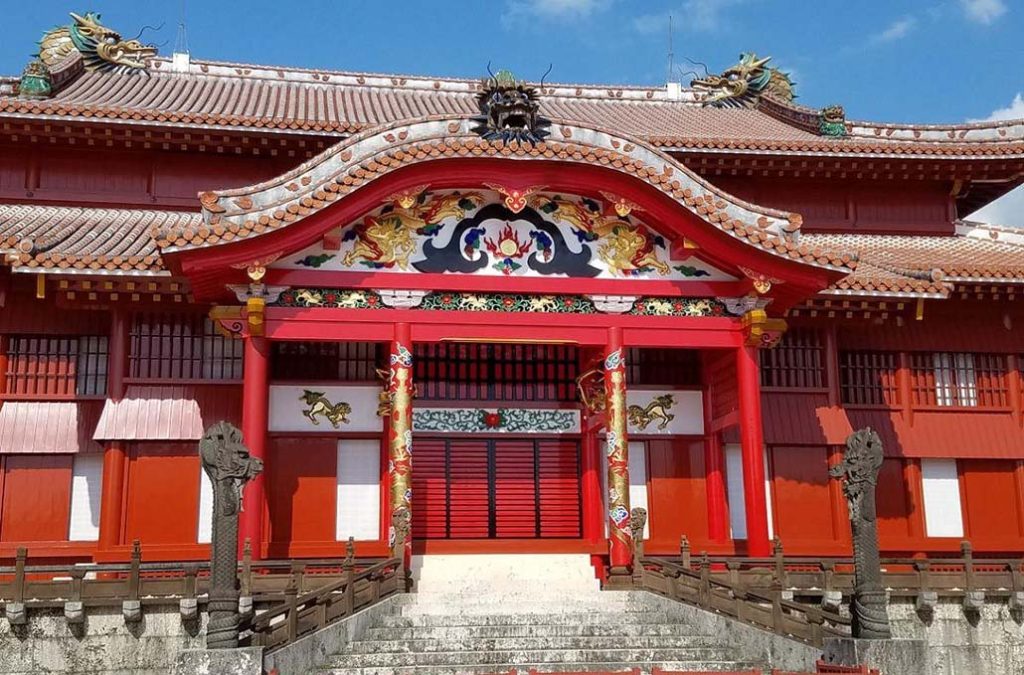
Shuri Castle itself is the site of the royal palace from the Ryukyu Kingdom era and stands as a vital symbol of Okinawan history.
Although the main structures were undergoing restoration when I visited, the scale and layout of the complex were still clearly evident in the accessible areas.
The red walls and wooden structures stand out strikingly against the backdrop of the blue sky. From the elevated vantage point, one can see the sprawling cityscape of Naha and the ocean in the distance.
At that moment, I felt something special: this place is more than just a tourist attraction; it serves as a spatial link connecting history with the present.
Manzamo: A Cliffside Landscape Sculpted by Sea Breezes
On the second day, I visited Manzamo.
This was one of the most memorable spots of my entire Okinawa trip.
Manzamo features cliffs facing the open sea; the rock formations have been eroded over time by sea breezes and waves, creating a unique shape resembling an elephant’s trunk.
Standing on the observation deck, I looked out over the endless expanse of the ocean. The sound of waves crashing against the rocks was distinct yet not noisy—instead, it possessed a rhythmic quality.
The wind was so strong that I had to turn slightly sideways just to keep my balance.
The sheer presence of nature’s power was palpable, making it impossible not to be captivated by the scene before me.
I stood there for a long time; rather than taking many photos, I simply watched the waves crash against the rocks and slowly recede, over and over again.
Kouri Island: A Bridge Spanning the Sea
Kouri Island was a stop I truly loved.
You reach the island by crossing a bridge that spans the open sea.
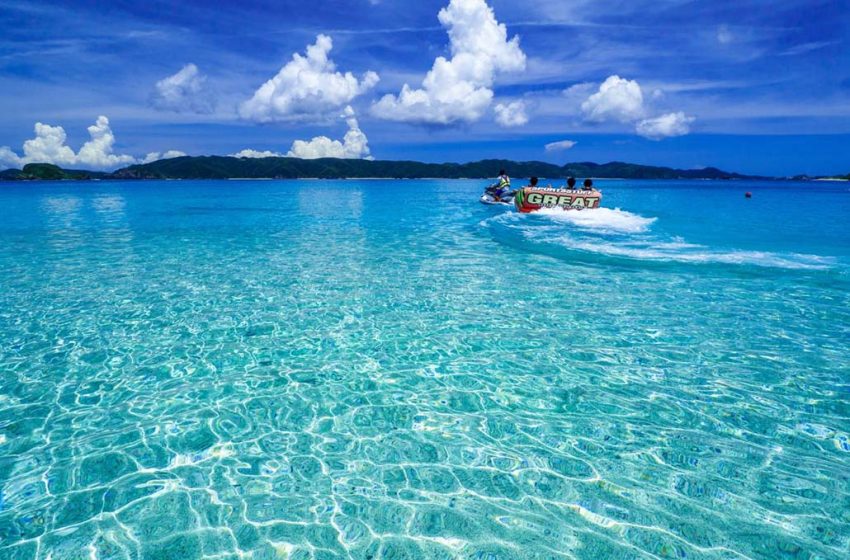
As the car drove across the bridge, I was surrounded by unobstructed ocean views on both sides. The water displayed a stunning gradient of colors, shifting from light to deep blue without anything to block the sightline.
It was a unique experience—feeling as though I was driving right across the ocean.
Once on the island, the pace of life felt much more relaxed.
The island is small, yet the views are expansive. I walked a circuit taking in the various viewpoints, and the sea was visible in almost every direction.
Unlike the limited perspectives offered by urban coastlines, here I was enveloped by a 360-degree panorama of the sea.
The wind was strong, the sky was clear, and the clouds moved rapidly across the horizon. Standing at a high vantage point, I almost lost my sense of direction; nothing remained but the sea and the wind.
Manzamo and the Natural Flow of the Coastline
During my few days in Okinawa, I visited several coastal spots, each offering a unique experience.
Some featured cliffs, others sandy beaches or rocky stretches, but they all shared one thing in common: the sea was always the star of the show.
In many places, you don’t need to go out of your way to find a viewpoint, as the entire setting is a landscape in itself.
I once walked for a long time along a seaside path; there was hardly anyone around—just the sounds of the wind and the waves.
The sense of space was profound, creating the illusion that the world had suddenly expanded.
Experiencing the Area Around Okinawa Churaumi Aquarium
Although the aquarium itself is an indoor attraction, the surrounding area forms a cohesive marine-themed zone.
Looking down from the high ground near the entrance, you can see the coastline stretching far into the distance.
I spent a long time in the outdoor area; the view was incredibly open, allowing me to take in the interplay of the sea, the sky, and the architecture all at once.
This “holistic environmental experience” left a deeper impression on me than simply visiting the indoor exhibits.
Kaichu Road: A Long Causeway Connecting Islands
Kaichu Road (Sea Road) is, in my opinion, one of Okinawa’s most unique experiences.
This causeway connects several small islands, looking as though it were laid directly upon the surface of the sea.
As you drive along, the sea stretches out on both sides with almost nothing to block the view.
This visual experience easily creates the illusion that the car is moving across the ocean rather than driving on land.
I stopped at several viewpoints along the way, and at each one, I could see the color of the sea shift in completely different ways.
In some areas, the water was a pale blue, while in others it was deeper, allowing me to even make out the layered patterns of the waves.
Okinawa World: A Dual Realm of Underground and Surface
“Okinawa World” is a comprehensive attraction that combines natural caves with cultural exhibits.
What impressed me the most was Gyokusendo Cave.
Upon entering the cave, the temperature dropped noticeably, and the air became humid.
A long walkway winds through the interior, and the lighting is understated—avoiding excessive brightness to preserve the authentic feel of the natural cavern. The stalactite formations are incredibly dense; in some areas, they resemble natural sculptures.
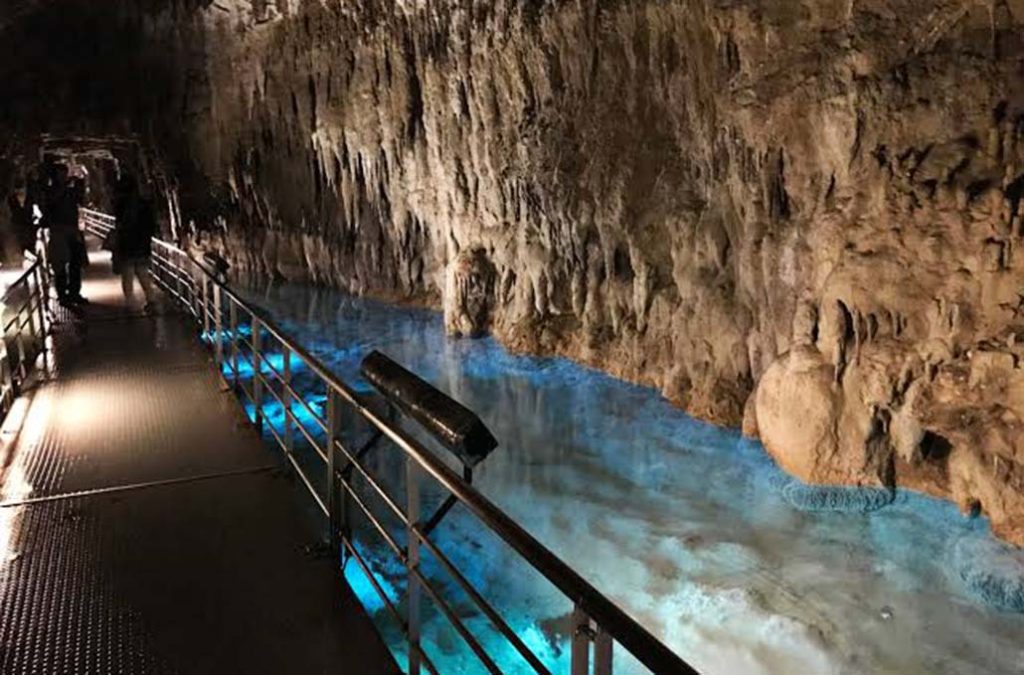
Walking through them evokes a distinct sensation of entering an underground world—
—a stark contrast to the sun-drenched coast outside.
The Overall Pace of the Okinawa Trip
What struck me most about this trip wasn’t any single specific attraction, but the overall pace.
Unlike the high-intensity, multi-tasking style of travel often found in Tokyo, Okinawa is better suited for “slow observation.”
There is no need to rush between multiple locations in a single day or meticulously plan a packed itinerary.
Often, simply standing in one spot and gazing at the sea constitutes a complete experience in itself.
The Final Moments Before Leaving Okinawa
The day before I left, I returned to the seaside.
I had no specific destination in mind; I simply found a spot with a view of the ocean and stood there.
It was a windy day; clouds raced across the sky, and the color of the sea shifted constantly.
I lingered there for a long time, doing nothing but watching the horizon.
Even now, looking back, that scene remains vivid in my memory.
My Travel Memories of Okinawa
If I were to summarize this trip, I would say Okinawa is not a destination defined by “thrills,” but rather by the “experience of space.”
Its charm lies not in the sheer impact of any single attraction, but in an environment that consistently fosters a relaxed, contemplative way of seeing things.
Here:
The sea is the protagonist.
The wind sets the rhythm.
The space itself is the core of the experience.
If you are looking for a destination where you don’t have to rush through an itinerary, Okinawa is truly worth exploring at a leisurely pace.