
To be honest, I didn’t set out to “compare hotels” during this trip to Bangkok. My initial plan was simple: find a few well-rated places with convenient transport links and devote most of my time to exploring the city itself.
However, once I actually stayed there, I realized that a hotel’s role in a Bangkok trip goes beyond being just a “place to sleep”; it serves as a lens through which to understand the city’s structure. Hotels in different districts directly alter your perception of Bangkok’s rhythm.
I stayed at five hotels, each distinct in style and location, and each offered me a unique perspective on the city.
I. The First Hotel: The Rhythm of Sukhumvit
I spent my first night at a business-style hotel in the Sukhumvit area.
My first impression of this district was one of speed. The streets were bustling, the BTS Skytrain rumbled past constantly, and the area was packed with malls, restaurants, and bars. The hotel itself was straightforward but boasted an excellent location—stepping outside placed me right in the heart of the local lifestyle.
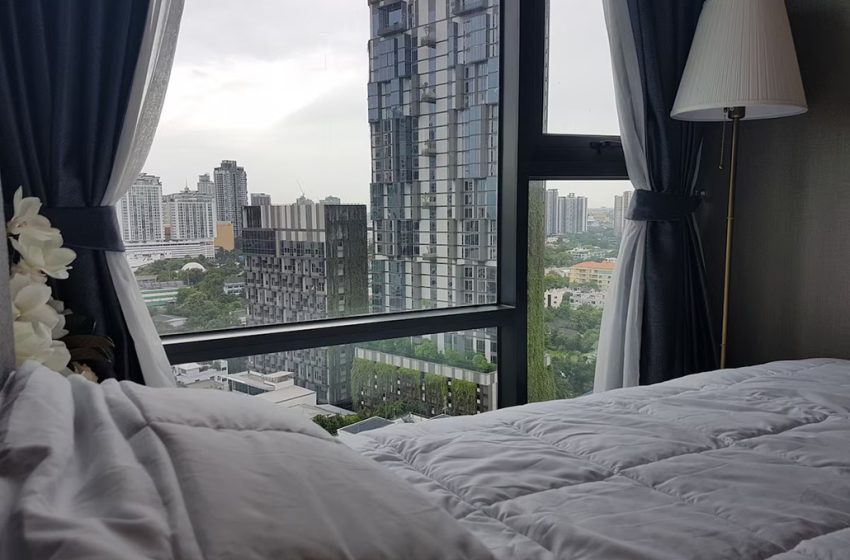
I checked in at night; walking into the lobby with my luggage, I was met with the quintessential atmosphere of a city hotel: clean, standardized, and highly efficient. The room wasn’t large, but it was immaculate, offering a view of the city lights and traffic flow outside.
I didn’t do much that night other than stand by the window and gaze at the Sukhumvit nightscape. The feeling was unmistakable—this was a district that never truly fell silent.
This hotel made me realize for the first time that Bangkok’s “fast pace” begins right where you stay.
II. The Second Hotel: A Slower Pace by the Chao Phraya River
For my second hotel, I chose a resort-style property with river views near the Chao Phraya River.
The pace here was markedly slower—a complete contrast to Sukhumvit. Upon entering the lobby, the space opened up, revealing views of the river and the silhouettes of temples on the opposite bank.
My room faced the Chao Phraya River; by day, I could watch boats shuttling back and forth, and by night, the city lights shimmered in the water’s reflection.
One morning, I woke up early and, without rushing to an itinerary, simply sat on the balcony gazing out at the river. That sense of tranquility belonged to a completely different world than Sukhumvit. Here, Bangkok is not a “city in motion” so much as a slow-flowing lifeline.
III. The Third Hotel: Central Siam (Siam)
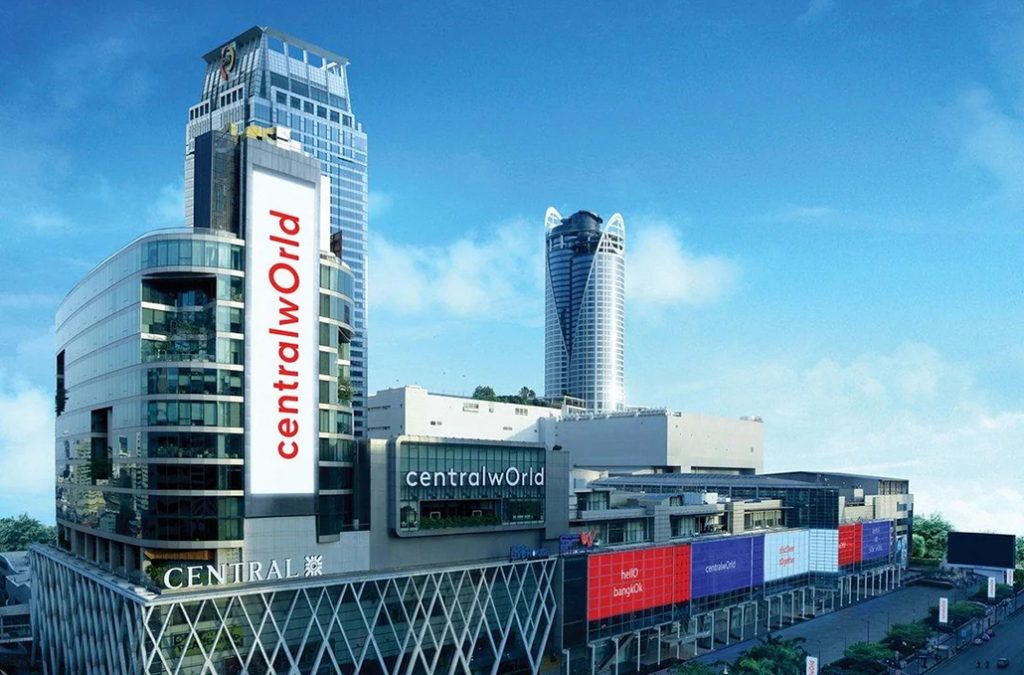
For my third hotel, I chose an urban property near Siam, primarily for the convenience of shopping and transportation.
It occupies a prime location surrounded by major malls like Siam Paragon and MBK—places that almost every tourist visits.
The hotel itself is modern with a minimalist design, but its standout feature is efficiency. Check-in, getting around, and shopping are all seamless, ensuring virtually no time is wasted.
However, staying here gave me a distinct impression: the information density is overwhelming.
With malls, advertisements, crowds, and subway exits all clustered together, you feel constantly driven forward by the question of “where to go next.”
This hotel revealed another side of Bangkok to me—a highly commercialized, fast-paced central district.
IV. The Fourth Hotel: A Sense of Local Life in the Old City (Rattanakosin)
For the fourth hotel, I chose a small boutique property near the Old City (Rattanakosin).
Located close to the Grand Palace and the Temple of the Emerald Buddha, the atmosphere here is completely different from the city center.
The hotel lacks lavish amenities but possesses a genuine sense of “local life.” The front desk staff were friendly, and the surrounding streets were quieter, lined with small local shops.
I took a walk nearby in the evening and saw scenes of local daily life rather than the typical tourist-centric environment.
Returning to the hotel, I felt something unique: I was no longer in the “city center,” but rather on the historic fringe of the city.
That night’s experience made me realize that Bangkok is not merely a modern metropolis; it is a city rich in historical layers.
V. The Fifth Hotel: A Transitional Space Near the Airport (Suvarnabhumi)
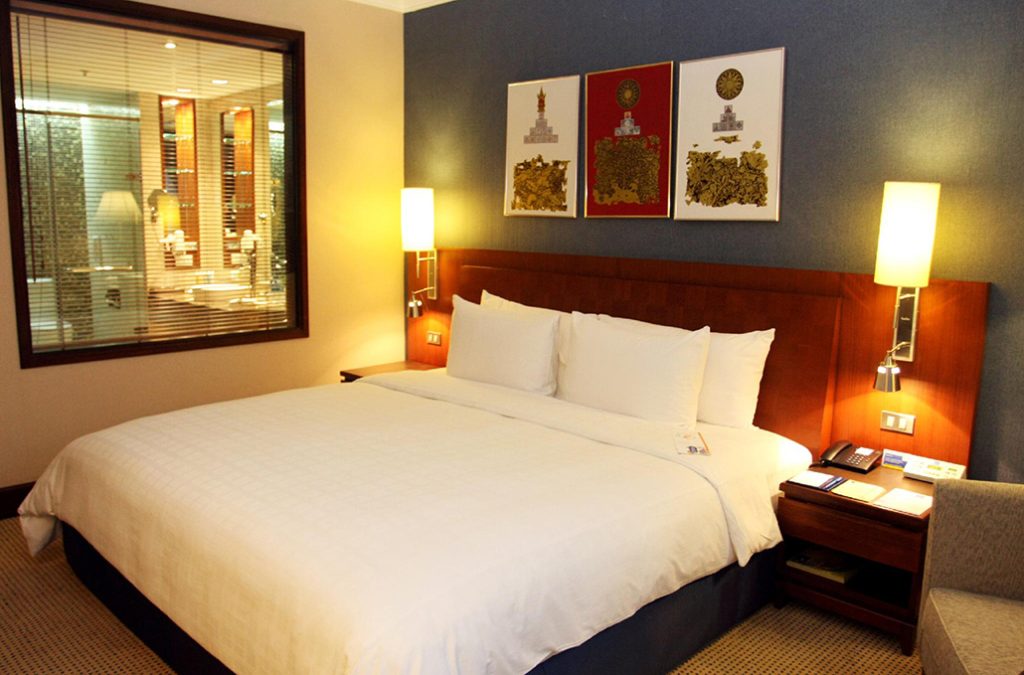
For my final night, I stayed at a transit hotel near Suvarnabhumi Airport.
The choice was simple: convenience for catching my flight the next day.
Yet, the experience was actually quite interesting, as it perfectly captured the feeling of “wrapping up a trip.”
The hotel itself was straightforward and highly functional—clean, quiet, and devoid of elaborate decor. There wasn’t much to explore in the immediate vicinity; everything was designed to facilitate a smooth transition. That night, I stopped thinking about the city’s frenetic pace; instead, I simply packed my bags and reflected on the journey as a whole.
In such an intimate, self-contained space, the essence of the trip actually came into sharper focus.
Hotels offer a unique lens through which to understand a city
Looking back at these five hotels, I gradually realized something: they were not merely places to stay, but gateways to different facets of the city.
Bangkok itself is a mosaic of these varying rhythms.
Hotels simply allow you to observe the city from these distinct vantage points. For me, the most significant takeaway from this trip wasn’t the number of hotels I stayed in, but the realization—for the first time—that a city’s structure can be reinterpreted through the simple act of choosing where to stay.