
To be honest, before visiting Bangkok, my impression of the city’s traffic was simple: hot, congested, and full of motorcycles.
However, after actually spending time there, I discovered that Bangkok’s transport isn’t just a single issue, but a complex yet understandable system. It encompasses subways, Skytrains, buses, taxis, ride-hailing services, ferries, and even motorcycle taxis—each with its own logic.
What’s even more interesting is that the mode of transport you choose actually changes the way you view the city.
I. Riding the BTS Skytrain for the First Time: A Clear View of the “City’s Skeleton”
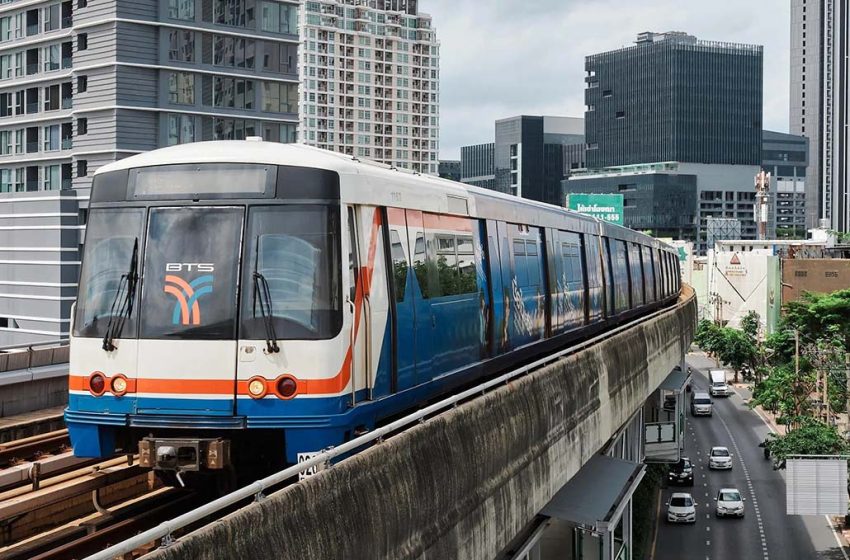
On my first day in Bangkok, I tried the BTS Skytrain.
To be frank, I was a bit surprised when I first boarded. It wasn’t merely a “means of transport”; it felt more like an observation route suspended above the city.
The carriages were clean, the air conditioning was powerful, and the ride was smooth. Most importantly, it completely bypassed the traffic congestion on the ground.
Sitting by the window and watching the traffic, shopping malls, and streets recede behind me, I felt a striking contrast: chaos on the ground, yet order in the sky.
In that moment, I realized that the BTS isn’t just for commuting; it acts as the “structural backbone” of Bangkok.
II. The MRT Subway Experience: A Deeper Connection to the City
Later, I also tried the MRT subway system.
Compared to the BTS, the MRT is more “underground” and leans closer to local life. The station layouts are clear and the signage is user-friendly, making it easy to navigate even for first-time visitors.
The most distinct impression was that the MRT connects “residential areas” rather than “tourist zones.”
Once, I took the MRT from the city center to a more outlying area. Upon exiting the station, I saw a more authentic side of Bangkok: residential neighborhoods, street stalls, and community markets, rather than malls and hotels.
That’s when I realized: if you only ride the BTS, you see “Modern Bangkok,” but by incorporating the MRT, you get to see “Bangkok as it is lived.”
III. Ride-hailing Experience: Bolt and Grab are the Go-to Options
After spending a few days in Bangkok, I realized that ride-hailing apps are the most common way to get around.
I primarily used Grab, though I occasionally used Bolt as well.
The overall experience was smooth. With clear location tracking, transparent pricing, and designated pickup points, it saved a lot of the hassle and communication effort associated with traditional taxis.
Once, while traveling from the Siam shopping district to a hotel by the Chao Phraya River, I booked a ride via Grab and was picked up within minutes. The entire process required almost no verbal communication—just confirming the pickup point and destination was enough.
However, there is a practical issue: traffic jams during rush hours, making travel times unpredictable.
In downtown Bangkok, covering even a few kilometers can sometimes take a long time, so it helps to be mentally prepared for that.
IV. Traditional Taxis and the “Meter” Issue: Experience Matters
I also tried traditional taxis.
Taxis in Bangkok are brightly colored and widely available, but the reality is that not every driver will automatically use the meter.
I once hailed a taxi in a shopping district; the driver initially quoted a fixed price, and only agreed to use the meter after I insisted.
I learned a valuable lesson from that: for short trips or during rush hours, it is better to prioritize ride-hailing apps; if you do take a traditional taxi, make sure to confirm the pricing method beforehand.
V. Chao Phraya River Ferries: An Underrated Mode of Transport
Many tourists overlook one particular mode of transport: the Chao Phraya Express Boat.
Personally, I really enjoy this method.
It may not be the fastest, but it offers some of the best scenery.
I once took a boat from Wat Arun to the area near the Grand Palace. The journey took just over ten minutes, yet it revealed a completely different side of Bangkok, with temples, old houses, and modern architecture interspersed along the riverbanks.
The wind was strong and the water a bit choppy, but the overall experience was incredibly relaxing.
If the BTS offers a view of the city’s “structure,” the ferry offers a glimpse into a “cross-section of daily life.”
VI. Motorbikes and Short-Distance Travel: A Mix of Speed and Risk
For navigating narrow alleys or making short trips, I also saw many people using motorbike taxis. The defining characteristic of this mode of transport is obvious: it is fast—very fast.
This is especially true during heavy traffic jams, as motorcycles can weave directly through the flow of vehicles with high efficiency.
Personally, however, I didn’t use it often; in an unfamiliar city, this method is better suited for locals or for very short-distance trips.
Nevertheless, it does reflect a key feature of Bangkok’s traffic: the system is a coexistence of multiple layers rather than a single, uniform structure.
VII. The Walking Experience: Seemingly Simple, Yet Not Entirely Pedestrian-Friendly
Many people might assume that city travel involves plenty of walking.
In Bangkok, however, walking is actually a “limited option.”
There are a few main issues:
Large intersections that break the continuity of the walking path
Hot weather
Incomplete pedestrian infrastructure
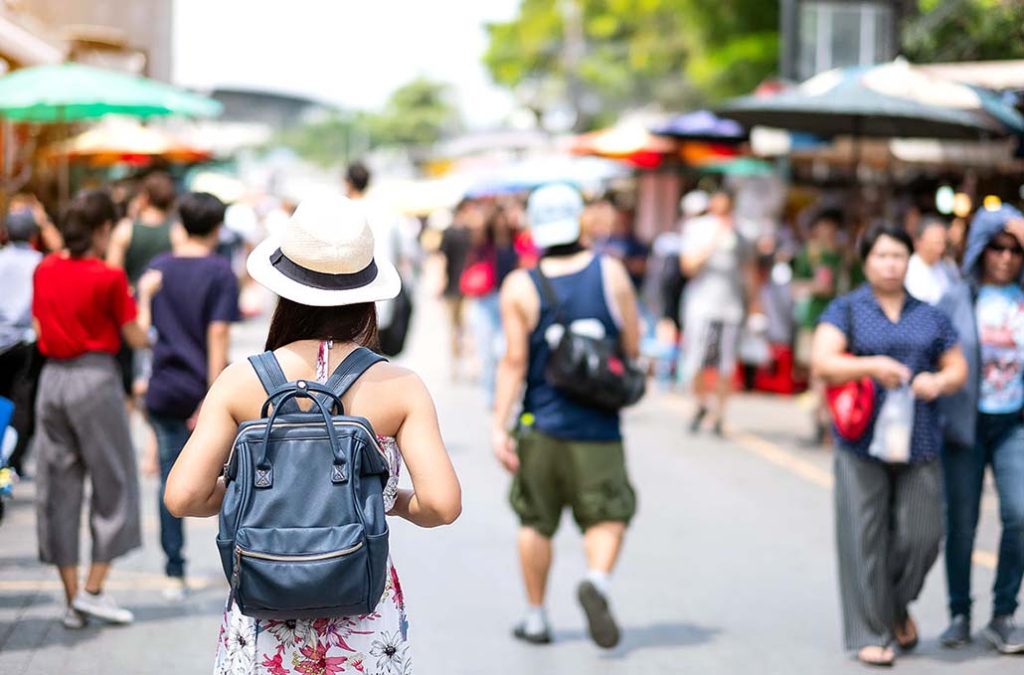
Interestingly, though, the walking experience is excellent in certain areas—such as the Siam shopping district or parts of the Old Town.
In other words, it isn’t that Bangkok is “unsuitable for walking,” but rather that the walking experience is inconsistent.
VIII. Summary of Transport Tips: Understanding the Rhythm Matters More Than Choosing the Mode
After spending some time in Bangkok, I gradually formed a key realization:
The modes of transport themselves aren’t complicated; what is complex is the “shifting of rhythms.”
To see the city’s structure → Take the BTS
To see local life → Take the MRT
To move quickly → Grab / Bolt
To see the cityscape → Take a ferry
To experience the local way → Take a motorcycle
Each mode of transport essentially corresponds to a different version of Bangkok.
The Essence of Bangkok’s Transport Is the Coexistence of Multiple Systems
As I left Bangkok and reflected on the routes I’d taken over the past few days, I realized something:
The city’s transport isn’t “chaotic”; it is a case of “multiple systems running in parallel.”
It doesn’t operate under a single, unified rule; instead, multiple systems overlap to create an urban structure capable of accommodating diverse groups of people.
For me, the biggest takeaway was this:
In Bangkok, learning how to get around is, in itself, part of understanding the city.